It's a bingo sheet of stereotypes, tokens, and tropes!
TV Tropes have ruined my life. Learning
about gender, race, sexuality, and deviance has ruined the television,
advertising, and movie world for me forever. I can’t watch anything without a
Bechdel test, and a weird shadow passes over my husband’s face every time he
picks up on privilege. I’m slowly ruining TV for him, too. Tropes are the step
beyond a stereotype, the familiar personality traits and types that flesh out
characters into believable people. We expect a certain kind of behavior from
certain kinds of characters, though that’s not something we tend to consciously
realize. It’s the way we see a male character and a female character in the
same situations, potentially with the same reaction, but the response is
gendered. It’s not that it is always offensive, or always right or wrong, it’s
just one more way we categorize people and find the ways in which we relate to
one another. For my gendered trope, I chose to check out what some might refer
to as: “The Bro Code”.
I myself not being a bro, am of course
fascinated by the "mysteries" of the bro code, all harkening back to the
original first commandment, ie: “Bros before Hoes.” I appreciated Amy Poehler’s
comeback of “Uteruses before Dude-eruses,” but it doesn’t quite have the same
flow. Still, if you look at the rules for bros and masculinity, you already see the
heteronormativity. Men are bros and pimps, and women are hoes and bitches, which you
know if you’ve read “Misogyny in Rap
Music: A Content Analysis
of Prevalence and Meaning” or if you’ve ever listened to one of the
roughly 22% of rap and hip hop songs containing misogynistic lyrics. Men put
down women to gain approval from their peers, and attempt to fall into the
highest spot in the social orders we place ourselves in. Bros before hoes
manages to convey this message using only three words.
Also, you've got to say "no homo", because having feelings it totally gay.
The Bro Code is a simple formula, a
real man puts his friends over his woman, and that code transcends racial
lines, though not sexuality. One might think that homosexual men would be
exalted for following The Bro Code a step beyond what the straight men are
doing, but that’s where the “No homo” part of the code comes in. Ironically,
Neil Patrick Harris, an openly gay man, in his role as the womanizing Barney
Stinson, coined “The Bro Code” on How I Met Your Mother. His character is
typically dismissed by the show’s protagonist, Ted, as he searches for a woman
to “complete” his dream, ignoring the code and the usual "caliber" of women Barney targets. Watching the Barney Stinson character, a good looking,
high power, blonde-haired-blue-eyed, straight, white man in an expensive suit,
constantly assuring his friends of his sexual prowess, we aren’t surprised when
we find out he has issues with his mother. No one is surprised when he gets his karma. It makes sense to us that he had his heart broken by a
woman, who left him for another man she deemed to be more powerful. It adds depth to his character beyond a
bro, making him relatable, and even at some times likeable for the audience.
Websters would define their relationship as a "bromance"
In the last year, Community has
been a popular, yet under-watched program revolving around an eclectic,
unlikely group of adult friends in a community college setting. Two characters,
Abed and Troy, have what is referred to as a “weird little relationship”. We
watch in one episode as Troy dumps a woman for calling Abed weird, sticking to
the code, but because of the close friendship these two heterosexual men have,
they are teased. In order to make sure the characters are not seen as gay, we
also see the character, Troy, lying to a woman about having been molested as a
child in order to get a date with a woman. “Misogyny in Rap Music: A Content Analysis of Prevalence and Meaning” points to the
ideal that we have gone beyond demanding that a man be sexual with a woman to
secure his place as a man; he must also trick and ultimately humiliate her in
his conquest, to ensure she is not empowered by her sexuality and experiences.
I'm not sayin' he's a gold digger, bro...
Kanye West is my guilty pleasure as a public figure. I love his twitter. His arrogance and vanity
have almost surpassed that of Sean “Diddy” Combs, and that was a feat I’d once
thought impossible. Dreams do come true! However, listening to his lyrics and
watching his videos, it’s not hard to see he’s following the bro code, too. He won't call a woman a gold digger, he's just going to make a video of sexy women dancing around him as he describes all the reasons everyone else is saying she's a gold digger. “Fuck bitches, get money” is Lil Wayne’s NIV version of the original rule. It’s pathetic; there's already such a small number of role models in the media for the
black community, white bro marketers have streamline role models for black
youth into misogynists with AmEx black cards. When asked about why there aren’t
more positive lyrics, artists of all genres have uniformly responded that
labels aren’t looking for empowerment and equality, they’re following the “fuck
bitches, get money” model too. The reason Uteruses before Dude-eruses really
doesn’t work is that in the rare instances women are in power, they are always
battling the bro code, and until the power is equalized and our society re-vamped, that won’t change. In
the hit movie Crash, Ludacris’s
character Anthony makes an ironic statement (ironic because Ludacris is a grammy-winning rapper, known for flowery, poetic songs like “Move, Bitch”) calling hip-hop music “the music
of the oppressor” in a conversation with a fellow car-jacker.
“See,
back in the day we had smart, articulate black men. Like Huey Newton, Bobby
Seale, Eldridge Cleaver, Fred Hampton... These brothers were speaking out, and
people were listening! Then the FBI said, “No, we can’t have that. Let’s give
the niggers this music by a bunch of mumbling idiots, and sooner or later, they’ll
all copy it, and nobody will be able to understand a fucking word they say.”" (Crash, 2004).
Couldn’t
we apply that same logic to the misogyny of lyrics across the board?
Remember this gem of equality?
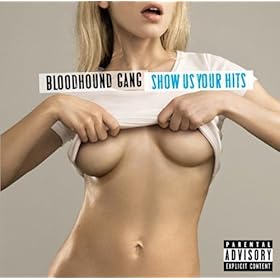
Featuring timeless classics like: A Lapdance is So Much Better When the Stripper is Crying. I wish I were kidding.
It’s
racist and unfair to claim that hip hop culture is the only culture
perpetuating misogyny and violence through music and film, even if the lyrics show a higher rate of
misogynistic language; when straight white bros hold the majority of the power
in the consumer market, shouldn’t we be holding them responsible for the way tv
and music perpetuate their code, before we rush to blame the systematically opressed?
Because this is only the tip of the degrading iceburg.
(Sorry for the wonky font, if anyone knows how to get fix this, please let me know. I'm Blogger challenged.)
Slutwalk 2011 was the first time I'd ever heard of anyone reclaiming the word "slut" formally. I'd heard it said amongst my friends in high school as a term of endearment, but also as a put down for anyone who was generally disliked. According to dictionary.com, a slut is a dirty, slovenly prostitute. According to etymonline, the definition is similar, but there's a small note that the term was used affectionately for a brief period. Despite a small amount of positivity, this word has been around since the late 14th century, and has since been used as a tool for shaming sexuality and degrading women. Until last year. July 31, 2011 Portland hosted its first annual Slutwalk. This was part of an effort started in Canada in response to a police officer's statement, "women should avoid dressing like sluts in order to not be victimized." Supporters, activists, guest speakers, sex workers, and performers of all ages gathered together to protest both victim blaming and sexual violence, some dressed provocatively, in the imitation of the picture "slut" brought to mind. And the message was wonderful, inspiring, educational, and unfortunately, not widespread enough. Today, February 22nd, 2012, slut is still an ugly word.
Mean girls are mean...
My mother would use the word "crude" to describe the way "slut" rolls off the tongue. "Slut" is synonymous with promiscuity. The number one definition on urbandictionary.com, a popular slang dictionary site, is "A woman with the morals of a man." The second definition describes a woman who will sleep with anyone, no matter how unattractive or pathetic, "she just has to {have sex with} everyone she knows." The author of the definition praises "sluts" as though they prevent more sex crimes from happening by being willing to have sex with anyone, suggesting that sluts are women who cannot be raped. Only on the third definition is it suggested that a slut is merely a sexually promiscuous person, though usually a woman. Looking at these definitions, it is clear that to thousands of people who voted positively for the definition a "slut" is decidedly female, though she is engaging in or thought to be engaging in behavior that as a society we encourage in men. There is no word you can call a man the has the same connotation, the same bad taste. Calling a man a slut is insulting his masculinity, which is why so often we seen "man slut" as a joke, or something associated with feminine or queer men. One of my friends continually states he does not like to be grouped with Portland gay men because, "Portland gays are sluts, and I'm just not… I'm too androgynous." Even within deviant groups, we pick each other apart.
Every man is not a master key, let me throw that out there.
In "What's Up, Slut?" by Marueen Dowd, the New York Times columnist explores the word briefly, calling it a word that was once a "summary judgement that a woman is damaged goods" but has become a slang employed by teenage girls and young women who are latching on to a fad. And from that, there's stemmed the movement to take back the word as a joke among friends. But what is the joke? I've been told a joke is only funny because it either ridiculous, or it's true. Applying that logic, it's funny to call a girlfriend a slut because she either would never have promiscuous sex, or because she's comfortable with her sexuality with or without promiscuity and that makes her friends uncomfortable so they tease her about it. "Social groups create deviance by making rules whose infraction constitutes deviance" according to Becker's Labeling theory (p39). In our society, labeling women as sluts has been our way of keeping women in line and making examples of women who have broken these rules by exploring their sexulaity in the same fashion that is encouraged in men. In "A few words about reclaiming Slut"author "Chloe" writes for feministing that women have been trying to reclaim the word "slut" since the Riot Grrrl movement involving Bikini Kill's Kathleen Hanna scrawling the word across her bare stomach to make a statement. The battle to take the sting out of the word that has been on the forefront of the new movement that is "Slutwalk" is not, in fact, new. Slutwalk Seattle responded that slut should be able to be used as a "sex-positive term" that would empower self-proclaimed sluts of any gender identity. Unfortunately, the problem with the word is not with "self-proclaimed sluts" it lies with those who choose to label others, and continue to bring others down with its use. Until we can rid the word "slut" of the connotation of a deviant woman, a woman who should be ostracized and ashamed of herself.
On an episode of the popular comedy/sitcom, Scrubs, the main female doctor has a one night stand, and walks the halls realizing everyone knows and is talking about her sexual experience. The rumors get outrageous. Her friends even join in the teasing and gossiping. After being understandably devastated, the character finds power in her "label" because people see her as knowledgeable about sex, and are paying attention to her where she previously felt invisible. Her friends apologize for not standing up for her, and she responds with a new attitude."I'm not sure. I mean, I was mad at you at first, but it's actually kind of empowering, you know, to have this...persona -- this identity. I mean, I'm not just some, you know, nameless, faceless white doctor -- I'm Elliot Reid: Tramp"
As a woman in a workplace that has been dominated by men for so long, it takes a lot to stand out for being anything other than a token hire. As we've discussed in class, most members of deviant groups have to work twice as hard to prove they are just as capable as the normative heterosexual white male employee. While it's admirable that a person can turn something so ugly and negative into a seemingly positive label or view, the situation points to the bigger issue. On February 23rd, we discussed the ideal of masculinity, and as Professor Williams said, loosely paraphrased, when we are telling people to "man up", we are also devaluing women and femininity. As people greet each other with, "Hey slut!" I believe we are devaluing sexuality, women, sexual experiences and there's little respect left for the person being greeted.
The reality hurts. A lot.
I am embarrassed as a human being hearing anyone use that word, though I am more embarrassed for the person using it. It angers me in my identity as a woman, especially to hear another woman use the word so carelessly. Just as the word "cunt" was originally a word meaning "sheath for a sword", "slut" was associated with another word: mud. And in the hundreds of years these words have been in use, the majority of their time has been spend degrading women. "Slut" is a word I think should be stripped of its ugliness, and left to wither away into a word that will no longer be used. I think Slutwalk is a fantastic idea, in it's message and practice, but I don't want to reclaim such a vile word and use it as my own. I don't want it to be ok to degrade women because of my identity as a woman. Words may be only as powerful as the power we give their meaning, but I think this is one of the many words that there's no loss in taking out of our mouths.
Think about it. Please.
Word count: 1290
Becker, Howard S. Thio, A., T. Calhoun, and A. Conyers. Readings in deviant behavior. 6th. Boston, MA: Allyn & Bacon, 2010. Page 39, Print. CHLOE. "A Few Words about Reclaiming "slut"" Feministing. 16 May 2011. Web. 27 Feb. 2012. <http://feministing.com/2011/05/16/a-few-words-about-reclaiming-“slut”/> Dowd, Maureen. "What's Up, Slut?" The New York Times. The New York Times, 15 July 2006. Web. 23 Feb. 2012. <http://www.nytimes.com/2006/07/15/opinion/15dowd.html>. Harper, Douglas. "Online Etymology Dictionary." Online Etymology Dictionary. Douglas Harper. Web. 27 Feb. 2012. <http://www.etymonline.com/index.php?allowed_in_frame=0>. Muscio, Inga. Cunt: A Declaration of Independence. 1st ed. Seattle: Seal, 1998. Print "Portland Events, Music, Art, Entertainment, Sustainability | PDXPIPELINE.com." July 31: Slutwalk Portland. Web. 22 Feb. 2012. <http://www.pdxpipeline.com/monthly-event-list/slutwalk-portland/> "Slut." Dictionary.com. Dictionary.com. Web. 23 Feb. 2012. <http://dictionary.reference.com/browse/slut>.